Sourcegraph Inc. is a company developing code search and code intelligence tools that semantically index and analyze large codebases so that they can be searched across commercial, open-source, local, and cloud-based repositories. The company has two core products: Code Search and Amp. A previous core product, Cody, retains limited legacy support for existing customers. Code Search was initially released in 2013 under the name Sourcegraph, but was rebranded to Code Search when the company unveiled Cody in 2023. As of 2021, the platform has around 800,000 developers and has indexed around 54 billion lines of code. In July 2025, new accounts for Cody were discontinued, and a new AI coding project, Amp, was released. In December 2025, Amp was spun-off to become a separate company. == History == Sourcegraph Inc. was founded by Stanford graduates Quinn Slack and Beyang Liu to drive the development of a code search and code intelligence tool, formerly called Sourcegraph. It was first released in 2013 but was rebranded to Code Search in 2023. It was partly inspired by Liu's experience using Google Code Search while he was a Google intern, It was designed to "tackle the big code problem" by enabling developers to manage large codebases that span multiple repositories, programming languages, file formats, and projects. Code Search was initially self-hosted by each customer on their own infrastructure. Early customers included Uber, Dropbox, and Lyft. In 2016, Code Search was criticized for being provided with a Fair Source License with the developers explaining that "all of Sourcegraph's source code is publicly available and hackable" and was intended to "help open sourcers strike a balance between getting paid and preserving their values". In 2018, Code Search was licensed under the Apache License 2.0, and Sourcegraph OSS has since been released under the Apache License 2.0. The commercial version, Code Search Enterprise, has been released under its own license. In 2023, Code Search was criticized for dropping the Apache license for most of its code, leaving it public but only available under its Enterprise license. In 2024, the main repository was made completely private. In 2019, Code Search was integrated into the GitLab codebase, giving GitLab users access to a browser-based developer platform. In 2021, a browser-based portal became available, allowing users to browse open-source projects and personal private code for free. In 2022, Sourcegraph Cloud, a commercial single-tenant cloud solution for organizations with more than 100 developers, was launched. Sourcegraph has raised a total of $223 million in financing to date. Its most recent $125 million Series D investment in 2021 valued the company at $2.625 billion, a 300% growth from its previous valuation in 2020. In 2023 Sourcegraph Inc. unveiled their new product Cody, and rebranded Sourcegraph to Code Search. In 2025, Sourcegraph announced the discontinuation of Cody Free, Pro, and Enterprise Starter plans, effective July 23, 2025, and launched Amp, a new AI coding agent. == Products == The company has three major products: Code Search, Amp, and Cody. === Sourcegraph Code Search === Code Search tool is used to search and summarize code. It supports over 30 programming languages and integrates with GitHub and GitLab for code hosting, Codecov for code coverage, and Jira Software for project management. Sourcegraph's Code Search uses a variant of Google's PageRank algorithm to rank results by relevance. While it was originally launched under the Apache License, on June 13, 2023, it was relicensed to the non-open-source "Sourcegraph Enterprise" license. Then, on August 22, 2024, the source code was moved to a private repository, and thus no longer source-available. === Sourcegraph Amp === Launched in 2025, Amp can generate code, generate documentation, write tests, and perform refactoring operations on projects. The tool operates on a credit-based pricing model and is available through web interfaces, command-line tools, and IDE extensions. In December 2025, Sourcegraph announced that Amp would be spun-off to become a separate company. === Sourcegraph Cody === Cody is an AI coding application for writing and maintaining code. Cody was released in December 2023 and was available for Microsoft Visual Studio Code and most JetBrains IDEs. As of July 2025, Cody Free, Pro, and Enterprise Starter plans have been discontinued, with only Cody Enterprise remaining available for existing enterprise customers.
Neurorobotics
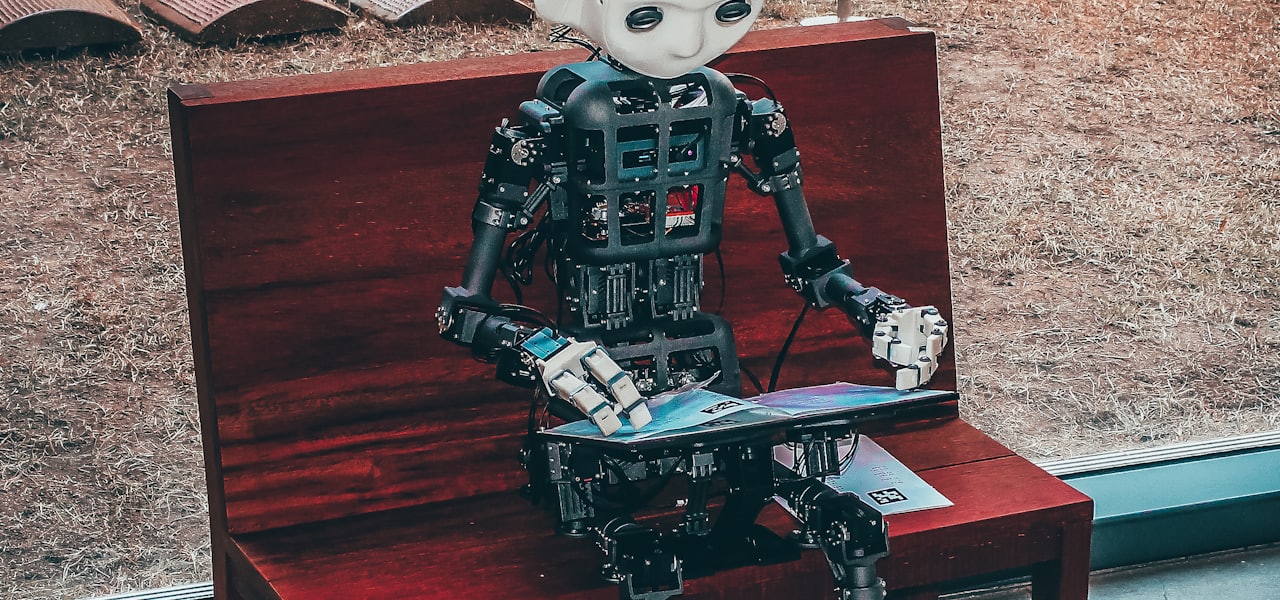
Neurorobotics is the combined study of neuroscience, robotics, and artificial intelligence. It is the science and technology of embodied autonomous neural systems. Neural systems include brain-inspired algorithms (e.g. connectionist networks), computational models of biological neural networks (e.g. artificial spiking neural networks, large-scale simulations of neural microcircuits) and actual biological systems (e.g. in vivo and in vitro neural nets). Such neural systems can be embodied in machines with mechanic or any other forms of physical actuation. This includes robots, prosthetic or wearable systems but also, at smaller scale, micro-machines and, at the larger scales, furniture and infrastructures. Neurorobotics is that branch of neuroscience with robotics, which deals with the study and application of science and technology of embodied autonomous neural systems like brain-inspired algorithms. It is based on the idea that the brain is embodied and the body is embedded in the environment. Therefore, most neurorobots are required to function in the real world, as opposed to a simulated environment. Beyond brain-inspired algorithms for robots neurorobotics may also involve the design of brain-controlled robot systems. == Major classes of models == Neurorobots can be divided into various major classes based on the robot's purpose. Each class is designed to implement a specific mechanism of interest for study. Common types of neurorobots are those used to study motor control, memory, action selection, and perception. === Locomotion and motor control === Neurorobots are often used to study motor feedback and control systems, and have proved their merit in developing controllers for robots. Locomotion is modeled by a number of neurologically inspired theories on the action of motor systems. Locomotion control has been mimicked using models or central pattern generators, clumps of neurons capable of driving repetitive behavior, to make four-legged walking robots. Other groups have expanded the idea of combining rudimentary control systems into a hierarchical set of simple autonomous systems. These systems can formulate complex movements from a combination of these rudimentary subsets. This theory of motor action is based on the organization of cortical columns, which progressively integrate from simple sensory input into a complex afferent signals, or from complex motor programs to simple controls for each muscle fiber in efferent signals, forming a similar hierarchical structure. Another method for motor control uses learned error correction and predictive controls to form a sort of simulated muscle memory. In this model, awkward, random, and error-prone movements are corrected for using error feedback to produce smooth and accurate movements over time. The controller learns to create the correct control signal by predicting the error. Using these ideas, robots have been designed which can learn to produce adaptive arm movements or to avoid obstacles in a course. === Learning and memory systems === Robots designed to test theories of animal memory systems. Many studies examine the memory system of rats, particularly the rat hippocampus, dealing with place cells, which fire for a specific location that has been learned. Systems modeled after the rat hippocampus are generally able to learn mental maps of the environment, including recognizing landmarks and associating behaviors with them, allowing them to predict the upcoming obstacles and landmarks. Another study has produced a robot based on the proposed learning paradigm of barn owls for orientation and localization based on primarily auditory, but also visual stimuli. The hypothesized method involves synaptic plasticity and neuromodulation, a mostly chemical effect in which reward neurotransmitters such as dopamine or serotonin affect the firing sensitivity of a neuron to be sharper. The robot used in the study adequately matched the behavior of barn owls. Furthermore, the close interaction between motor output and auditory feedback proved to be vital in the learning process, supporting active sensing theories that are involved in many of the learning models. Neurorobots in these studies are presented with simple mazes or patterns to learn. Some of the problems presented to the neurorobot include recognition of symbols, colors, or other patterns and execute simple actions based on the pattern. In the case of the barn owl simulation, the robot had to determine its location and direction to navigate in its environment. === Action selection and value systems === Action selection studies deal with negative or positive weighting to an action and its outcome. Neurorobots can and have been used to study simple ethical interactions, such as the classical thought experiment where there are more people than a life raft can hold, and someone must leave the boat to save the rest. However, more neurorobots used in the study of action selection contend with much simpler persuasions such as self-preservation or perpetuation of the population of robots in the study. These neurorobots are modeled after the neuromodulation of synapses to encourage circuits with positive results. In biological systems, neurotransmitters such as dopamine or acetylcholine positively reinforce neural signals that are beneficial. One study of such interaction involved the robot Darwin VII, which used visual, auditory, and a simulated taste input to "eat" conductive metal blocks. The arbitrarily chosen good blocks had a striped pattern on them while the bad blocks had a circular shape on them. The taste sense was simulated by conductivity of the blocks. The robot had positive and negative feedbacks to the taste based on its level of conductivity. The researchers observed the robot to see how it learned its action selection behaviors based on the inputs it had. Other studies have used herds of small robots which feed on batteries strewn about the room, and communicate its findings to other robots. === Sensory perception === Neurorobots have also been used to study sensory perception, particularly vision. These are primarily systems that result from embedding neural models of sensory pathways in automatas. This approach gives exposure to the sensory signals that occur during behavior and also enables a more realistic assessment of the degree of robustness of the neural model. It is well known that changes in the sensory signals produced by motor activity provide useful perceptual cues that are used extensively by organisms. For example, researchers have used the depth information that emerges during replication of human head and eye movements to establish robust representations of the visual scene. == Biological robots == Biological robots are not officially neurorobots in that they are not neurologically inspired AI systems, but actual neuron tissue wired to a robot. This employs the use of cultured neural networks to study brain development or neural interactions. These typically consist of a neural culture raised on a multielectrode array (MEA), which is capable of both recording the neural activity and stimulating the tissue. In some cases, the MEA is connected to a computer which presents a simulated environment to the brain tissue and translates brain activity into actions in the simulation, as well as providing sensory feedback The ability to record neural activity gives researchers a window into a brain, which they can use to learn about a number of the same issues neurorobots are used for. An area of concern with the biological robots is ethics. Many questions are raised about how to treat such experiments. The central question concerns consciousness and whether or not the rat brain experiences it. There are many theories about how to define consciousness. == Implications for neuroscience == Neuroscientists benefit from neurorobotics because it provides a blank slate to test various possible methods of brain function in a controlled and testable environment. While robots are more simplified versions of the systems they emulate, they are more specific, allowing more direct testing of the issue at hand. They also have the benefit of being accessible at all times, while it is more difficult to monitor large portions of a brain while the human or animal is active, especially individual neurons. The development of neuroscience has produced neural treatments. These include pharmaceuticals and neural rehabilitation. Progress is dependent on an intricate understanding of the brain and how exactly it functions. It is difficult to study the brain, especially in humans, due to the danger associated with cranial surgeries. Neurorobots can improved the range of tests and experiments that can be performed in the study of neural processes.
United States Tech Force
The U.S. Tech Force (also styled as US Tech Force, Tech Force, or Government Tech Force) is a federal hiring initiative launched by the second Donald Trump administration in December 2025. The program, administered by the Office of Personnel Management (OPM), aims to recruit about 1,000 early-career technology professionals into two-year government jobs to modernize federal IT systems, advance artificial intelligence (AI) capabilities, and address technological gaps in government operations. The initiative is an effort to plug capability gaps created by Trump-administration efforts to shrink the federal government, which led to the departure of some 220,000 federal employees, including many in IT. The initiative seeks early-career workers; officials said it would offer competitive salaries and opportunities to work on high-impact government technology projects. Major technology companies—including Amazon, Apple, Microsoft, Nvidia, Meta, Google, and OpenAI—agreed to help identify and refer candidates. Candidates are allowed to take Tech Force positions on leaves of absence and without divesting their stock, raising conflict-of-interest questions. In January 2026, OPM direction Scott Kupor said the deadline for applying to Tech Force was being extended because of "tremendous interest" without saying how many people had actually applied. Also in December 2025, news broke that the administration is planning another novel use of private-sector workers: hiring cybersecurity firms for offensive cyber operations.
Agentive logic
Agentive logic (also called the logic of action or logic of agency) is the field of philosophical logic and logic in computer science that studies formal representations of agents, their actions, and their abilities. An agentive logic in the narrower sense is a formal system whose primitive operators express that an agent does something, can do something, or sees to it that something is the case. Agentive logics generalise modal logic by adding modalities indexed to agents and to actions. Typical examples include: STIT logics (from sees to it that) with operators of the form [ i s t i t : φ ] {\displaystyle [i\ {\mathsf {stit}}:\varphi ]} meaning that agent i {\displaystyle i} sees to it that φ {\displaystyle \varphi } holds; dynamic logics of action with program-like modalities [ α ] φ {\displaystyle [\alpha ]\varphi } and ⟨ α ⟩ φ {\displaystyle \langle \alpha \rangle \varphi } meaning, roughly, that after every (respectively, some) execution(s) of action α {\displaystyle \alpha } , φ {\displaystyle \varphi } holds; logics with explicit agentive operators such as "can do", "brings about", or "is able to ensure". Agentive logics are used in action theory in philosophy, in the semantics of natural language, in the theory of program verification, and in artificial intelligence, where they underpin formalisms for reasoning about actions, planning, and intelligent agents. == Terminology and scope == The adjective agentive derives from the Latin agens ("one who acts") and originally referred to the grammatical agent of a verb. In logical contexts it designates operators or predicates whose primary argument position is an agent rather than a proposition alone, for example A i φ {\displaystyle A_{i}\varphi } ("agent i {\displaystyle i} does φ {\displaystyle \varphi } ") or C i φ {\displaystyle C_{i}\varphi } ("agent i {\displaystyle i} can bring about φ {\displaystyle \varphi } "). In contemporary literature, agentive logic is sometimes used narrowly for formal reconstructions of St. Anselm's modal account of facere ("to do"). More broadly, the term is used interchangeably with logic of action or logic of agency to cover a family of modal and dynamic logics designed to capture the structure of action and choice. == Historical background == === Medieval and early modern roots === Medieval logicians already explored analogies between modalities of action and alethic modalities such as possibility and necessity, for instance, in discussions of obligation and power. An influential early agentive analysis is due to St. Anselm (11th century), who treated "doing φ {\displaystyle \varphi } " as a kind of modal operator on propositions, anticipating later modal logics of agency. Modern reconstructions of Anselm's theory show that the resulting "agentive logic" can be modelled with neighbourhood semantics and satisfies a recognisable square of opposition. === Modern logic of action === Modern study of the logic of action began in the mid-20th century, parallel to developments in deontic logic and tense logic. Early systems were proposed by Georg Henrik von Wright, Stig Kanger, and others, often motivated by questions about norms and responsibility. From the 1960s onward, two largely independent but eventually converging traditions emerged: a branching-time tradition, culminating in STIT logics, emphasising agents' choices among possible futures; and dynamic logics of programs and actions, developed within computer science to reason about program execution. In the 1990s and 2000s, action logics were further developed in connection with knowledge representation, planning, and multi-agent systems in AI, and with dynamic and update semantics in linguistics. == Core ideas == Despite their diversity, most agentive logics share some general themes: Agents are treated as explicit indices of modal operators, as in [ i d o e s ] φ {\displaystyle [i\ {\mathsf {does}}]\varphi } or C i φ {\displaystyle C_{i}\varphi } . Actions are represented either implicitly, via changes between possible worlds along an accessibility relation, or explicitly, as terms denoting primitive and composite actions. Choice and ability are captured by modalities describing what an agent can ensure, usually relative to assumptions about the environment and other agents. Formal properties such as closure under composition, interaction between different agents, and connections to obligation (what an agent ought to do) and knowledge (what an agent knows how to do) are investigated. == STIT logics == STIT ("sees to it that") logics, originating in work by Nuel Belnap and collaborators, treat agency in a branching-time framework. A STIT model consists of a partially ordered set of moments with a tree-like structure, sets of histories (maximal branches through the tree), and for each agent at each moment, a partition of the histories through that moment representing the choices available to the agent. Intuitively, an agent's action at a moment determines which equivalence class (choice cell) of histories becomes actual; a formula [ i s t i t : φ ] {\displaystyle [i\ {\mathsf {stit}}:\varphi ]} is true at a history–moment pair if φ {\displaystyle \varphi } holds on all histories in the choice cell corresponding to the agent's current action. Different STIT operators have been distinguished, notably: the Chellas STIT operator, often written [ i c s t i t : φ ] {\displaystyle [i\ {\mathsf {cstit}}:\varphi ]} , which requires only that the agent's choice guarantees φ {\displaystyle \varphi } ; and the deliberative STIT operator, [ i d s t i t : φ ] {\displaystyle [i\ {\mathsf {dstit}}:\varphi ]} , which additionally requires that φ {\displaystyle \varphi } is not already historically necessary. STIT frameworks have been extended with group agency operators, temporal modalities, epistemic operators, and deontic operators to study responsibility, collective action, and obligations under indeterminism. == Dynamic logics of action == Dynamic logic was originally developed to reason about the behaviour of computer programs, treating program execution as a kind of action. In propositional dynamic logic (PDL), action terms α , β , … {\displaystyle \alpha ,\beta ,\dots } denote abstract programs or actions, and formulas of the form [ α ] φ {\displaystyle [\alpha ]\varphi } and ⟨ α ⟩ φ {\displaystyle \langle \alpha \rangle \varphi } express that all, respectively some, terminating executions of α {\displaystyle \alpha } lead to states where φ {\displaystyle \varphi } holds. From the standpoint of agentive logic, dynamic logic provides: a language for building complex actions from primitives via sequencing, choice, and iteration (e.g., α ; β {\displaystyle \alpha ;\beta } , α ∪ β {\displaystyle \alpha \cup \beta } , α ∗ {\displaystyle \alpha ^{}} ); a Kripke semantics in which actions correspond to labelled accessibility relations; and proof systems (such as Hoare logic and weakest precondition calculi) for reasoning about the correctness of action sequences. Extensions such as concurrent dynamic logic add operators for parallel composition, allowing reasoning about interacting processes and concurrent actions. John-Jules Ch. Meyer and others have argued that dynamic logic is a natural base for logics of agents, by adding modalities for knowledge, belief, and ability on top of the action modalities. Dynamic logics have also been applied to normative reasoning, yielding dynamic deontic logics where actions are related to obligations and permissions, and to dynamic epistemic logics in which information-changing actions such as announcements are modelled as programs. == Situation calculus and other action formalisms == In artificial intelligence, reasoning about action and change is often based on first-order languages that explicitly represent situations, events, and fluents (time-varying properties). The best known is situation calculus, introduced by John McCarthy and developed extensively by Raymond Reiter. In such formalisms: action terms name primitive actions; a function symbol (often d o {\displaystyle {\mathsf {do}}} ) maps an action and a situation to a successor situation; and axioms describe which fluents hold in which situations and how actions change them. Reiter's successor state axioms give compact specifications of how each fluent changes under all actions, and precondition axioms specify when actions are possible. Related formalisms include the event calculus and fluent calculus, which provide alternative ways of representing events and their effects. While these systems are often first-order rather than modal, they are closely related to agentive logics: their action terms and transition structures can be seen as providing models for dynamic or STIT-style modalities, and conversely, dynamic logics can be used as abstract specification languages for such AI formalisms. == Ability, agency, and related modalities == Many agentive logics introduce explicit operators for ability or "can-do"
Compute (machine learning)
In machine learning and deep learning, compute is the amount of computing power or computational resources required to train machine learning models and large language models. More broadly, compute is the computational power or resources necessary for a computer or computer program to function. == Definition == Compute is commonly defined as the amount of computing power or computational resources required to train machine learning and large language models. The term "compute" has also been more broadly applied to cloud computing, referencing processing power, memory, networking, storage, and other resources required for the computation of any program. Compute is measured in petaflop/s-days and is used to document AI training. A petaflop/s-day (pfs-day) consists of performing 1015 neural net operations per second for one day, or a total of about 1020 operations. The compute-time product serves as a mental convenience, similar to kilowatt-hour for energy. An amount of compute is meant to give an idea of the number of actual operations performed. == History == In a 2018 analysis titled "AI and compute", artificial intelligence company OpenAI introduced the concept of compute. OpenAI identified two eras of training AI systems in terms of compute-usage. From 1959 to 2012, compute roughly followed Moore’s law. Between 2012 and 2018, the amount of compute used in the largest AI training runs increased exponentially, growing by more than 300,000 times — roughly doubling every 3.4 months. By comparison, Moore’s Law doubled every two years over the same period. One of the largest models, released in 2020, used 600,000 times more computing power than the 2012 model. After 2020, compute growth began to slow down, with the compute needed for the largest AI models continuing to slow down in 2023. The notion of compute has become increasingly used from the mid-2020s onwards. == Compute growth and AI progress == Larger AI models trained on more data and using more computational resources, tend to perform better. This happens even if the algorithms themselves remain unchanged. As early as 2018, OpenAI noted the exponential increase in compute to be have a key role in AI progress. OpenAI considers three factors drive the advance of AI: algorithmic innovation, data, and the amount of compute available for training. AI models with more compute not only improve in the tasks they were trained on but can develop emergent abilities. Incremental improvements can lead to more abrupt leaps in capabilities. AI provider SpaceXAI said in 2026 that their AI progress is driven by compute and used it a key metric in the AI training of its supercomputer Colossus, the which contains 1 million GPUs. Anthropic has a contract of $1.25 billion per month with SpaceXAI to buy all the compute capacity at Colossus 1 data center. === Criticism and policy === Increasing, promoting or constraining progress in artificial intelligence has often be done via controlling the amount of compute. Policymarkers have enacted policies and provided support to make compute resources more accessible to domestic AI researchers. In a January 2022 report, the Center for Security and Emerging Technology (CSET) suggested to institutions that increasingly powerful and generalizable AI (AGI) will likely require other strategies than maximizing compute. Some AI researchers are also concerned that government might exclusively focus on scaling compute instead of other strategies. The CSET has reported on the various bottlenecks which could explain why deep learning needs for compute have slow down: training is expensive and training extremely large models generates traffic jams across many processors that are difficult to manage. there is a limited supply of AI chips (see AI chip memory shortage). CSET advances that the main resource is human capital, specifically talented researchers — according to a 2023 published survey of more than 400 AI researchers, academic and private sector workers. The survey found that AI researchers are not primarily or exclusively constrained by compute access. However, both academic and industry AI researchers equally report concerns that insufficient compute could prevent them from contributing meaningfully to AI research in the future. High compute users are more concerned about compute access. When asked about which resource provided by the government would be the most useful to them, some AI researchers select compute, other prefer grant funding. For this goal, CSET advised policymakers to ensure that even researchers with smaller budgets could effectively contribute to AI research. Other proposed strategies include using contemporary AI algorithms, managing modern AI infrastructure or focusing on interdisciplinary work between the AI field and other fields of computer science. A 2024 study on compute access found that academic-only AI research teams often have less compute intensive research topics, especially foundation models, compared to industry AI labs. As a consequence, academia is likely to play a smaller role in advancing such techniques. The researchers suggest nationally-sponsored computing infrastructure as well as open science initiatives to boost academic compute access. === Data === A 2022 study found that current large language models are significantly under-trained, a consequence of focusing on scaling language models whilst keeping the amount of training data constant. By training over 400 language models of various parameter and token size, they found that "for compute-optimal training", the model size and the number of training tokens should ideally be scaled equally: for every doubling of model size the number of training tokens should also be doubled.
Tesla Dojo
Tesla Dojo is a series of supercomputers designed and built by Tesla for computer vision video processing and recognition. It was used for training Tesla's machine learning models to improve its Full Self-Driving (FSD) advanced driver-assistance system. It went into production in July 2023. Dojo's goal was to efficiently process millions of terabytes of video data captured from real-life driving situations from Tesla's 4+ million cars. This goal led to a considerably different architecture than conventional supercomputer designs. In August 2025, Bloomberg News reported that the Dojo project had been disbanded, though it was restarted in January 2026. == History == Tesla operates several massively parallel computing clusters for developing its Autopilot advanced driver assistance system. Its primary unnamed cluster using 5,760 Nvidia A100 graphics processing units (GPUs) was touted by Andrej Karpathy in 2021 at the fourth International Joint Conference on Computer Vision and Pattern Recognition (CCVPR 2021) to be "roughly the number five supercomputer in the world" at approximately 81.6 petaflops, based on scaling the performance of the Nvidia Selene supercomputer, which uses similar components. However, the performance of the primary Tesla GPU cluster has been disputed, as it was not clear if this was measured using single-precision or double-precision floating point numbers (FP32 or FP64). Tesla also operates a second 4,032 GPU cluster for training and a third 1,752 GPU cluster for automatic labeling of objects. The primary unnamed Tesla GPU cluster has been used for processing one million video clips, each ten seconds long, taken from Tesla Autopilot cameras operating in Tesla cars in the real world, running at 36 frames per second. Collectively, these video clips contained six billion object labels, with depth and velocity data; the total size of the data set was 1.5 petabytes. This data set was used for training a neural network intended to help Autopilot computers in Tesla cars understand roads. By August 2022, Tesla had upgraded the primary GPU cluster to 7,360 GPUs. Dojo was first mentioned by Elon Musk in April 2019 during Tesla's "Autonomy Investor Day". In August 2020, Musk stated it was "about a year away" due to power and thermal issues. Dojo was officially announced at Tesla's Artificial Intelligence (AI) Day on August 19, 2021. Tesla revealed details of the D1 chip and its plans for "Project Dojo", a datacenter that would house 3,000 D1 chips; the first "Training Tile" had been completed and delivered the week before. In October 2021, Tesla released a "Dojo Technology" whitepaper describing the Configurable Float8 (CFloat8) and Configurable Float16 (CFloat16) floating point formats and arithmetic operations as an extension of Institute of Electrical and Electronics Engineers (IEEE) standard 754. At the follow-up AI Day in September 2022, Tesla announced it had built several System Trays and one Cabinet. During a test, the company stated that Project Dojo drew 2.3 megawatts (MW) of power before tripping a local San Jose, California power substation. At the time, Tesla was assembling one Training Tile per day. In August 2023, Tesla powered on Dojo for production use as well as a new training cluster configured with 10,000 Nvidia H100 GPUs. In January 2024, Musk described Dojo as "a long shot worth taking because the payoff is potentially very high. But it's not something that is a high probability." In June 2024, Musk explained that ongoing construction work at Gigafactory Texas is for a computing cluster claiming that it is planned to comprise an even mix of "Tesla AI" and Nvidia/other hardware with a total thermal design power of at first 130 MW and eventually exceeding 500 MW. In August 2025, Bloomberg News reported that the Dojo project was disbanded, though Musk announced it would be restarted in January 2026 with a new chip iteration. == Technical architecture == The fundamental unit of the Dojo supercomputer is the D1 chip, designed by a team at Tesla led by ex-AMD CPU designer Ganesh Venkataramanan, including Emil Talpes, Debjit Das Sarma, Douglas Williams, Bill Chang, and Rajiv Kurian. The D1 chip is manufactured by the Taiwan Semiconductor Manufacturing Company (TSMC) using 7 nanometer (nm) semiconductor nodes, has 50 billion transistors and a large die size of 645 mm2 (1.0 square inch). Updating at Artificial Intelligence (AI) Day in 2022, Tesla announced that Dojo would scale by deploying multiple ExaPODs, in which there would be: 10 Cabinets per ExaPOD (1,062,000 cores, 3,000 D1 chips) 2 System Trays per Cabinet (106,200 cores, 300 D1 chips) 6 Training Tiles per System Tray (53,100 cores, along with host interface hardware) 25 D1 chips per Training Tile (8,850 cores) 354 computing cores per D1 chip According to Venkataramanan, Tesla's senior director of Autopilot hardware, Dojo will have more than an exaflop (a million teraflops) of computing power. For comparison, according to Nvidia, in August 2021, the (pre-Dojo) Tesla AI-training center used 720 nodes, each with eight Nvidia A100 Tensor Core GPUs for 5,760 GPUs in total, providing up to 1.8 exaflops of performance. === D1 chip === Each node (computing core) of the D1 processing chip is a general purpose 64-bit CPU with a superscalar core. It supports internal instruction-level parallelism, and includes simultaneous multithreading (SMT). It doesn't support virtual memory and uses limited memory protection mechanisms. Dojo software/applications manage chip resources. The D1 instruction set supports both 64-bit scalar and 64-byte single instruction, multiple data (SIMD) vector instructions. The integer unit mixes reduced instruction set computer (RISC-V) and custom instructions, supporting 8, 16, 32, or 64 bit integers. The custom vector math unit is optimized for machine learning kernels and supports multiple data formats, with a mix of precisions and numerical ranges, many of which are compiler composable. Up to 16 vector formats can be used simultaneously. ==== Node ==== Each D1 node uses a 32-byte fetch window holding up to eight instructions. These instructions are fed to an eight-wide decoder which supports two threads per cycle, followed by a four-wide, four-way SMT scalar scheduler that has two integer units, two address units, and one register file per thread. Vector instructions are passed further down the pipeline to a dedicated vector scheduler with two-way SMT, which feeds either a 64-byte SIMD unit or four 8×8×4 matrix multiplication units. The network on-chip (NOC) router links cores into a two-dimensional mesh network. It can send one packet in and one packet out in all four directions to/from each neighbor node, along with one 64-byte read and one 64-byte write to local SRAM per clock cycle. Hardware native operations transfer data, semaphores and barrier constraints across memories and CPUs. System-wide double data rate 4 (DDR4) synchronous dynamic random-access memory (SDRAM) memory works like bulk storage. ==== Memory ==== Each core has a 1.25 megabytes (MB) of SRAM main memory. Load and store speeds reach 400 gigabytes (GB) per second and 270 GB/sec, respectively. The chip has explicit core-to-core data transfer instructions. Each SRAM has a unique list parser that feeds a pair of decoders and a gather engine that feeds the vector register file, which together can directly transfer information across nodes. ==== Die ==== Twelve nodes (cores) are grouped into a local block. Nodes are arranged in an 18×20 array on a single die, of which 354 cores are available for applications. The die runs at 2 gigahertz (GHz) and totals 440 MB of SRAM (360 cores × 1.25 MB/core). It reaches 376 teraflops using 16-bit brain floating point (BF16) numbers or using configurable 8-bit floating point (CFloat8) numbers, which is a Tesla proposal, and 22 teraflops at FP32. Each die comprises 576 bi-directional serializer/deserializer (SerDes) channels along the perimeter to link to other dies, and moves 8 TB/sec across all four die edges. Each D1 chip has a thermal design power of approximately 400 watts. === Training Tile === The water-cooled Training Tile packages 25 D1 chips into a 5×5 array. Each tile supports 36 TB/sec of aggregate bandwidth via 40 input/output (I/O) chips - half the bandwidth of the chip mesh network. Each tile supports 10 TB/sec of on-tile bandwidth. Each tile has 11 GB of SRAM memory (25 D1 chips × 360 cores/D1 × 1.25 MB/core). Each tile achieves 9 petaflops at BF16/CFloat8 precision (25 D1 chips × 376 TFLOP/D1). Each tile consumes 15 kilowatts; 288 amperes at 52 volts. === System Tray === Six tiles are aggregated into a System Tray, which is integrated with a host interface. Each host interface includes 512 x86 cores, providing a Linux-based user environment. Previously, the Dojo System Tray was known as the Training Matrix, which includes six Training Tiles, 20 Dojo Interface Processor cards across four host servers, and Ethernet-l
Commonsense knowledge (artificial intelligence)
In artificial intelligence research, commonsense knowledge consists of facts about the everyday world, such as "Lemons are sour" or "Cows say moo", that all humans are expected to know. It is currently an unsolved problem in artificial general intelligence. The first AI program to address common sense knowledge was Advice Taker in 1959 by John McCarthy. Commonsense knowledge can underpin a commonsense reasoning process, to attempt inferences such as "You might bake a cake because you want people to eat the cake." A natural language processing process can be attached to the commonsense knowledge base to allow the knowledge base to attempt to answer questions about the world. Common sense knowledge also helps to solve problems in the face of incomplete information. Using widely held beliefs about everyday objects, or common sense knowledge, AI systems make common sense assumptions or default assumptions about the unknown similar to the way people do. In an AI system or in English, this is expressed as "Normally P holds", "Usually P" or "Typically P so Assume P". For example, if we know the fact "Tweety is a bird", because we know the commonly held belief about birds, "typically birds fly," without knowing anything else about Tweety, we may reasonably assume the fact that "Tweety can fly." As more knowledge of the world is discovered or learned over time, the AI system can revise its assumptions about Tweety using a truth maintenance process. If we later learn that "Tweety is a penguin" then truth maintenance revises this assumption because we also know "penguins do not fly". == Commonsense reasoning == Commonsense reasoning simulates the human ability to use commonsense knowledge to make presumptions about the type and essence of ordinary situations they encounter every day, and to change their "minds" should new information come to light. This includes time, missing or incomplete information and cause and effect. The ability to explain cause and effect is an important aspect of explainable AI. Truth maintenance algorithms automatically provide an explanation facility because they create elaborate records of presumptions. Compared with humans, all existing computer programs that attempt human-level AI perform extremely poorly on modern "commonsense reasoning" benchmark tests such as the Winograd Schema Challenge. The problem of attaining human-level competency at "commonsense knowledge" tasks is considered to probably be "AI complete" (that is, solving it would require the ability to synthesize a fully human-level intelligence), although some oppose this notion and believe compassionate intelligence is also required for human-level AI. Common sense reasoning has been applied successfully in more limited domains such as natural language processing and automated diagnosis or analysis. == Commonsense knowledge base construction == Compiling comprehensive knowledge bases of commonsense assertions (CSKBs) is a long-standing challenge in AI research. From early expert-driven efforts like CYC and WordNet, significant advances were achieved via the crowdsourced OpenMind Commonsense project, which led to the crowdsourced ConceptNet KB. Several approaches have attempted to automate CSKB construction, most notably, via text mining (WebChild, Quasimodo, TransOMCS, Ascent), as well as harvesting these directly from pre-trained language models (AutoTOMIC). These resources are significantly larger than ConceptNet, though the automated construction mostly makes them of moderately lower quality. Challenges also remain on the representation of commonsense knowledge: Most CSKB projects follow a triple data model, which is not necessarily best suited for breaking more complex natural language assertions. A notable exception here is GenericsKB, which applies no further normalization to sentences, but retains them in full. == Applications == Around 2013, MIT researchers developed BullySpace, an extension of the commonsense knowledgebase ConceptNet, to catch taunting social media comments. BullySpace included over 200 semantic assertions based around stereotypes, to help the system infer that comments like "Put on a wig and lipstick and be who you really are" are more likely to be an insult if directed at a boy than a girl. ConceptNet has also been used by chatbots and by computers that compose original fiction. At Lawrence Livermore National Laboratory, common sense knowledge was used in an intelligent software agent to detect violations of a comprehensive nuclear test ban treaty. == Data == As an example, as of 2012 ConceptNet includes these 21 language-independent relations: IsA (An "RV" is a "vehicle" | X is an instance of a Y) UsedFor (a "cake tin" is used for "making cakes" | X is used for the purpose Y) HasA (A "rabbit" has a "tail" | X possesses Y element or feature) CapableOf (a "cook" is capable of "making baked goods" | X is capable of doing Y) Desires (a "child" desires "the aroma of baking" | X has a desire for Y) CreatedBy ("cake" is created by a "baker" | X is created by Y) PartOf (a "knife" is be part of a "knife set" | X is a part of Y) Causes ("Heat" causes "cooking"| X is what causes Y) LocatedNear (the "oven" is located near the "refrigerator" | X is located near Y) AtLocation (Somewhere a "Cook" can be at a "restaurant" | X is at the location of Y) DefinedAs (a "Cupcake" is defined as a "cake" that also has the qualities of being "small", "baked within a wrapper", and "containing only one area of frosting or icing" | X is defined as Y that also has the properties A, B & C) SymbolOf (a "heart" is a symbol of "affection" | X is a symbolic representation of Y) ReceivesAction ("cake" can receive the action of being "eaten" | X is capable of receiving action Y) HasPrerequisite ("baking" has the prerequisite of obtaining the "ingredients" | X cannot do Y unless A does B) MotivatedByGoal ("baking" is motivated by the goal of "consumption"/"eating" | X has the motivation of Y goal) CausesDesire ("baking" makesYou want to "follow recipe" | X causes the desire to do Y) MadeOf ("Cake" is made of "flour"/"eggs"/"sugar"/"oil"/etc | X is made of Y) HasFirstSubevent ("baking" has first subevent "make batter" | To do X the first thing that needs to be done is Y) HasSubevent ("eat" has subevent "swallow" | Doing X will lead to Y event following) HasLastSubevent ("sleeping" has last subevent of "waking" | Doing X ends with the event Y) == Commonsense knowledge bases == Cyc Open Mind Common Sense (data source) and ConceptNet (datastore and NLP engine) Evi Graphiq